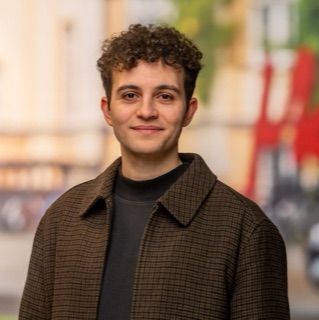
Darius Rostam
Postdoc, University of Bonn · Executive Director, Bucerius IP Center
Welcome! I am a postdoc at University of Bonn and Executive Director of the Center for Transnational IP, Media and Technology Law and Policy at Bucerius Law School in Hamburg.
My research focuses on private law as well as law and technology, especially copyright and AI.
If you like to collaborate, feel free to email me.
What I am currently working on
Remuneration schemes for use of copyright-protected subject matter in generative AI
On Viacom v YT: „Even if you win the fight on IP rights, if you don’t have a partnership through a license in the actual market where fans are, you are not going to have the service that fans really want. It was the first time that everybody realized that you can win the case but lose the business.“
„In these types of works, "providing catharsis within 10 seconds" is an absolute requirement.“ „As a result, the creator's role has transformed from a technician who draws pictures to a connoisseur who determines which original work to purchase and how to cook it, (…)“
Zu Technik und Kennenmüssen als Haftungsbegrenzungen beim Recht der öffentlichen Wiedergabe – zugleich Anmerkung zu EuGH, Urt. v. 9.7.2026 – C-788/24 – Anne Frank Fonds
.@pamelasamuelson.bsky.social and I filed an amicus brief today in the OpenAI copyright case in fed'l court in NY. Here's a link; description to follow. drive.google.com/file/d/1jbGv...
AI training meaning „using an asset to modify the learned parameters of a generative AI model“. But: Existing catch-all rules with wildcards (User-Agent: * with Disallow: /) do not count. To opt out, website owners must explicitly add the policy token.
OpenAI, Anthropic, Google announce to follow new opt-out standard re AI training (but not grounding for now). It‘s part of robots.txt, but instead of having to name each crawler on the User-Agent line, website owners may only use a single "policy token" __usage_ai-training
NEW PREPRINT: Cheap AI-Assisted Reverse Engineering and What It Will Do (in submission) We argue that AI coding tools make it easy, cheap, and fast to reverse engineer software and hardware—and IP law is not prepared for this challenge. arxiv.org/abs/2610.35633
Zum Umgang mit Umgehung – Anmerkung zu Generalanwalt beim EuGH, Schlussanträge vom 15.1.2026 – C-788/24 – Anne Frank Fonds
Targeting the Right Question: What AG Rantos Left Open in Anne Frank Fonds
Targeting the Right Question: What AG Rantos Left Open in Anne Frank Fonds
(Wieder nur) Zur Zulässigkeit von Vervielfältigungen für die Erstellung eines Datensatzes – zugleich Besprechung von OLG Hamburg, Urt. v. 10.12.2025 – 5 U 104/24 – LAION
Wenn künstliche Liebe gefährlich wird: Regulierung von AI Companions
Handlungslasten des Urhebers
If It Looks Like a Duck
Web Scraping in Culture and Law
Opt-Outs in Copyright Law: Can They Save AI Training Under Fair Use and the Three-Step Test?
Public Rules of Recognition of Platform Standards
Handlungslasten des Urhebers
(Nur) Zur Zulässigkeit von Vervielfältigungen für die Erstellung eines Datensatzes
Machine-Readable Opt-Outs in Kneschke vs LAION
Das Urheberrecht als Grenze der IT-Sicherheitsforschung
Die Evaluierung des UrhWissG – Case closed?
Cybersecurity als Unternehmensleitungsaufgabe
Urheberrecht und IT-Sicherheit
Das Erfordernis technikverständlichen Verhaltens im Urheberrecht
Urheberrechtliche Aspekte der Richtlinie 2019/770
Die rechtliche Zulässigkeit von Adblockern


